The Best Substrate for Corydoras!
Fine, smooth sand is my first choice for Corydoras, but I have also kept them successfully on fine gravel and aquasoil for years.
In this guide, I’ll share my experience with these substrates, explain what to look for when choosing one, and briefly cover fired clay and capped dirt as options I haven’t personally tested with Corydoras.
Affiliate disclosure: I earn a commission when you buy through affiliate links on this page, at no extra cost to you.
At A Glance
| Substrate | My Verdict |
|---|---|
| Fine Smooth Sand | 🟢 |
| Fine Rounded Gravel | 🟢 |
| Aquasoil | 🟢 |
| Fired Clay | 🟡 |
| Capped Dirt | 🟡 |
| Sharp Sand Or Gravel | 🔴 |
Key: 🟢 Good 🟡 May Work 🔴 Avoid
🟢 Fine Sand — My First Choice
I have kept Corydoras on JBL Sansibar without issue and would recommend its fine, smooth grains for most setups.
Check the specific product if you are using other sand substrates, as not every sand has a smooth texture.
🟢 Fine Gravel — A Suitable Alternative
Smooth, rounded 2–3 mm gravel has worked well in my Corydoras tanks.
Avoid sharp grains, and remember that coarser gravel can leave gaps that make food harder to reach.
🟢 Aquasoil — An Option for Planted Tanks
I have used Fluval Stratum with Corydoras for years without issue.
Consider initial ammonia release and its effects on pH and carbonate hardness before adding fish.
🟡 Fired Clay — No Direct Experience
A friend has kept Corydoras on Seachem Flourite for almost two years without reported problems.
I haven’t personally tested this combination, and texture varies between products.
🟡 Capped Dirt — No Direct Experience
I have a lot of experience with capped dirt tanks, but haven’t kept Corydoras in them.
The cap needs a suitable texture and enough depth to reduce the risk of digging exposing the soil.
🔴 Sharp Sand Or Gravel
Regardless of the substrate category, I would avoid products with sharp or abrasive grains that the fish would regularly rest and forage on.
Why Substrate Matters for Corydoras

Substrate plays a bigger role in the lives of Corydoras than it does for many other popular fish in the hobby that spend most of their time swimming higher in the tank.
Most Corydoras species spend much of their day near the bottom, often resting with their bellies directly against the substrate.
Foraging and Substrate Contact
Corydoras also spend considerable time searching for food, using their barbels to explore the bottom and pushing their snouts into the substrate as they forage.
This close contact makes the texture and shape of the substrate particularly important.
Although most discussions focus on protecting their barbels, rough or sharp substrate can also pose a risk to the skin around their mouths and undersides.
Abrasions can provide an entry point for infection, so I consider the surfaces the fish will rest and feed on when choosing a substrate.
Rolled vs. Crushed Substrate

Blanket recommendations to use sand or gravel only tell part of the story because products within both categories can differ considerably.
Rounded grains, whether naturally worn smooth or processed to soften their edges, provide a smoother surface than angular grains.
Crushed materials can have rough or sharp edges, although the finished texture varies between products.
This means I wouldn’t assume that every sand is suitable or that every gravel is unsuitable simply because of the name on the bag.
One frustration I have when comparing substrates is that product descriptions don’t always clearly explain the grain shape or how the material has been processed.
Rather than relying on a “sand” or “gravel” label alone, look for clear information about grain size, texture, and suitability for bottom-dwelling fish.
Sand For Corydoras

I have personally kept Corydoras on JBL Sansibar Sand without issue and would highly recommend it to anyone who can find it locally.
The version I use has very fine grains, around 0.2–0.6 mm, with a smooth texture that makes it well suited to Corydoras and other bottom-dwelling fish.
The fine grains form a closely packed surface, helping food remain accessible rather than disappearing into the gaps between larger pieces of substrate.
I also find it easy to clean when needed, although you need to be careful not to siphon away the sand along with the waste.
Growing Plants in Sand
I have successfully grown various plants in this sand, including species commonly described as heavy root feeders, without using root tabs.
This makes it a useful option for planted Corydoras tanks, with plenty of easy aquarium plants to choose from.
However, the sand itself does not provide everything those plants need to grow.
In my tanks, I use the fish-poop fertilisation method to make use of nutrients introduced through normal feeding and fish waste.
If you want to grow plants without root tabs, you still need to ensure they receive enough nutrients from these existing inputs or another suitable source.
Why I Wouldn’t Recommend Every Sand

One frustration when choosing sand is that product descriptions don’t always clearly explain whether the grains are rounded or angular.
Aqua Naturals Black Galaxy Sand is a good example of why I wouldn’t judge a substrate by its name or appearance alone.
It is one of the best black sands I have used for retaining its colour, but the grains in the product I used were noticeably angular, with plenty of sharp edges.
For that reason, I would not recommend it for Corydoras or other substrate-sifting fish, such as Apistogramma.
A sand can look excellent in an aquascape while still being something I would avoid for fish that regularly take substrate into their mouths.
Related Reviews
Gravel For Corydoras

I have personally kept Corydoras on fine gravel with a grain size of 2–3 mm multiple times without issue.
Although you will often see blanket warnings about keeping Corydoras on gravel, I think it is important to consider the size and texture of the individual grains.
A fine, smooth gravel is very different from a coarse or angular product, even though both are sold under the same general label.
Having kept multiple Corydoras species on fine sand, fine gravel, and aquasoil for years, I haven’t noticed an obvious difference in their overall activity or willingness to forage in my tanks.
Grain Size and Access to Food
One drawback of larger gravel substrates, such as pea gravel, is that food can fall into the gaps between the stones.
Although I know people who have successfully kept Corydoras on these substrates, those gaps can make some food harder for the fish to reach.
Fine gravel leaves far smaller spaces between the grains, which is one reason I prefer it over coarser alternatives for Corydoras.
Grain shape matters too, so I would not choose a gravel based on its size alone.
Crushed gravel can contain angular pieces with sharp edges, whereas a smooth, rounded product provides a more suitable surface for resting and foraging.
The Gravel I Have Used
I used Pettex Roman Gravel, which had smooth, rounded grains that worked well in my Corydoras tanks.
Unfortunately, the price I have seen it selling for has increased considerably, making JBL Sansibar Sand a better all-round option for me.
If you are comparing alternatives, check the grain size and texture of the specific product rather than assuming that all aquarium gravel is the same.
Growing Plants in Gravel
As with inert sand, I have successfully grown various easy-category aquarium plants in inert gravel without using root tabs.
This gives you another option for a planted Corydoras tank, provided the plants receive enough nutrients from elsewhere in the system.
Related Reviews
Aquasoil For Corydoras

I have personally kept Corydoras on Fluval Stratum Aquasoil (reviewed here) for years without issue, so my experience has been much more positive than some online discussions might suggest.
One thing I like about Stratum is its rounded granules, which avoid the sharp, angular edges found in some crushed sand and gravel products.
My Corydoras regularly push their snouts into it while foraging, and I haven’t observed any associated damage to their barbels, eyes, or skin.
Both my albino Corydoras aeneus and my pygmy Corydoras have also been able to feed directly from its surface without difficulty.
With the foods I use, I haven’t found food disappearing between the granules to be a significant problem.
Does Aquasoil Break Down?
One of my aquasoil tanks houses six Corydoras aeneus and a Siamese algae eater and is approaching three years old.
Despite their regular activity around the bottom, I haven’t noticed significant breakdown of the aquasoil or any related problems.
That is my experience with Stratum, rather than a guarantee that every aquasoil will remain in the same condition for the same length of time.
Ammonia Release During Setup
Aquasoil does have some potential drawbacks to consider, regardless of which fish you plan to keep.
Some products can release substantial amounts of ammonia when first submerged, although the amount varies between aquasoils.
I use the dark start cycling method to establish the tank before adding livestock, allowing time to deal with this initial release.
Don’t assume the tank is ready simply because a set number of weeks has passed, though, as water testing should confirm that ammonia and nitrite are being processed before you add fish.
Effects on pH and Carbonate Hardness
Another consideration is that active aquasoils can lower pH and carbonate hardness, changing the water conditions in your tank.
In my own setups, I haven’t found Stratum to push these parameters outside a suitable range for the Corydoras species I keep.
I have also found its buffering effect becomes less noticeable over time, although this will depend on the product, source water, and tank maintenance.
My results won’t necessarily match everyone else’s, so check your water parameters and the requirements of your chosen Corydoras species when deciding whether aquasoil suits your setup.
Related Reviews
Fired Clay For Corydoras

I want to cover fired-clay substrates briefly, but I should make it clear that I have no direct experience keeping Corydoras on them.
Although I use Fluval’s fired-clay substrate from its aquascaping boxes in two of my tanks, neither setup houses Corydoras.
The material I have handled feels smoother than its angular appearance suggests, especially compared with some crushed sands and gravels I have used.
However, I wouldn’t assume that every fired-clay product has the same texture or suitability.
A Friend’s Experience with Seachem Flourite
A good friend of mine has kept his Corydoras aeneus on Seachem Flourite for almost two years without reporting any substrate-related problems.
That is a useful example of someone using this type of substrate successfully over an extended period, although it is their experience rather than my own.
For now, I would treat fired clay as a potential option that needs to be assessed by the specific product, rather than something I can personally recommend for Corydoras.
Related Reviews
Capped Dirt For Corydoras
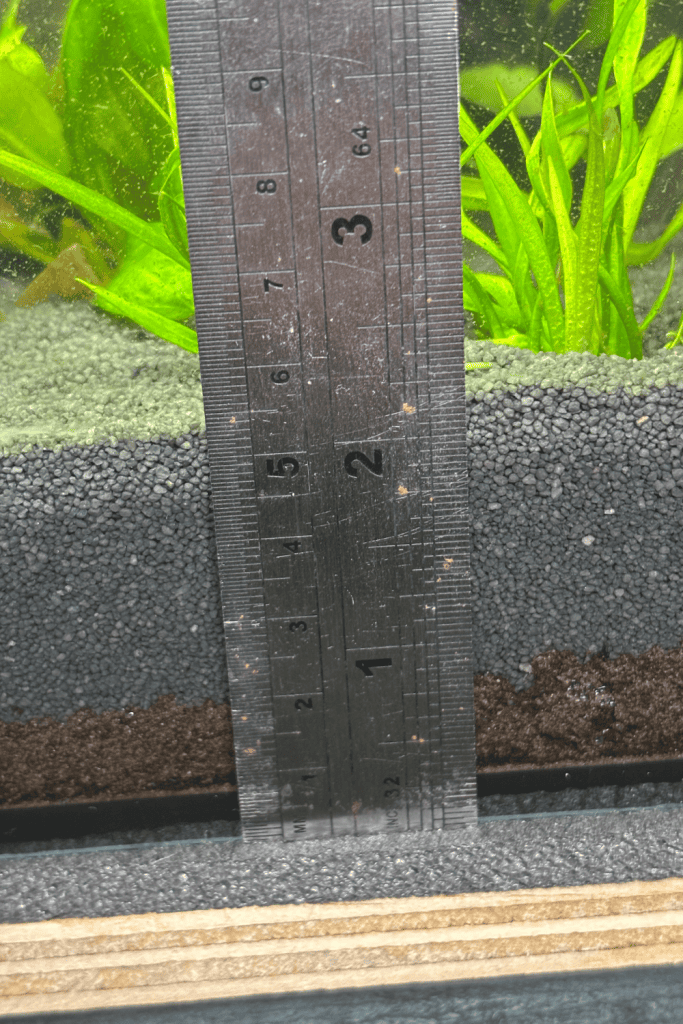
A capped dirt substrate consists of a layer of soil covered with sand or fine gravel, combining a nutrient-rich base for plants with a separate surface layer.
I have plenty of experience with Walstad method aquariums that use this approach, but I have never personally kept Corydoras in those setups.
It can be an affordable option for planted tanks, although keeping the soil secure beneath the cap is important.
Can Corydoras Expose the Soil?
A common concern is that Corydoras may forage deeply enough to disturb the cap and expose the soil underneath.
I know people who successfully keep Corydoras in capped dirt tanks, using soil-to-cap depth ratios of around 1:1 or 1:2 to help keep the soil covered.
However, the ratio alone doesn’t tell you how much protection the cap provides, as the actual depth of the surface layer matters too.
A thicker cap may reduce the chance of the fish reaching the soil, but I wouldn’t treat any particular ratio as a guarantee that it cannot happen.
Choosing a Suitable Cap
The surface your Corydoras interact with will usually be sand or fine gravel, so the same considerations about grain size, smoothness, and sharp edges still apply.
If I were setting up a capped dirt tank for Corydoras, JBL Sansibar Sand would be my preferred cap, provided it was available locally.
I have used it successfully as a cap in Walstad tanks and as a standalone substrate in tanks containing Corydoras, although I haven’t personally tested that combined setup.
I would allow a little extra depth in the cap to reduce the likelihood of the fish exposing the soil, then monitor their digging and check that the soil remains covered.
Related Reviews
Final Thoughts
For most people setting up a Corydoras tank, a fine, smooth sand would be my first choice, with JBL Sansibar being a product I have personally used and would happily recommend.
It provides an accessible surface for feeding, allows the fish to forage, and has worked well for growing plants in my tanks.
However, I have also kept Corydoras successfully on smooth, fine gravel and Fluval Stratum for years, so I wouldn’t dismiss those options because they aren’t sand.
The grain size, texture, and behaviour of the specific product matter more than a broad label on the bag.
Fired clay and capped dirt may also work in suitable setups, but my lack of direct experience keeping Corydoras on them means they aren’t my first recommendations.
If your Corydoras are already doing well on a suitable substrate, I wouldn’t rush to replace it purely because someone online insists that only one substrate type can work.
Choose a substrate that gives your fish a suitable surface to rest and forage on, works with your planting plans, and is practical for you to maintain.